

Hardy's Cottage Garden Plants
Echinacea purpurea 'Magnus'
Echinacea purpurea 'Magnus'
Back soon
Couldn't load pickup availability
Plants are dispatched in growing condition and may not be in full flower. If too tall to pack safely, we may cut them back — this helps them establish more quickly. Read our Mail Order FAQs.
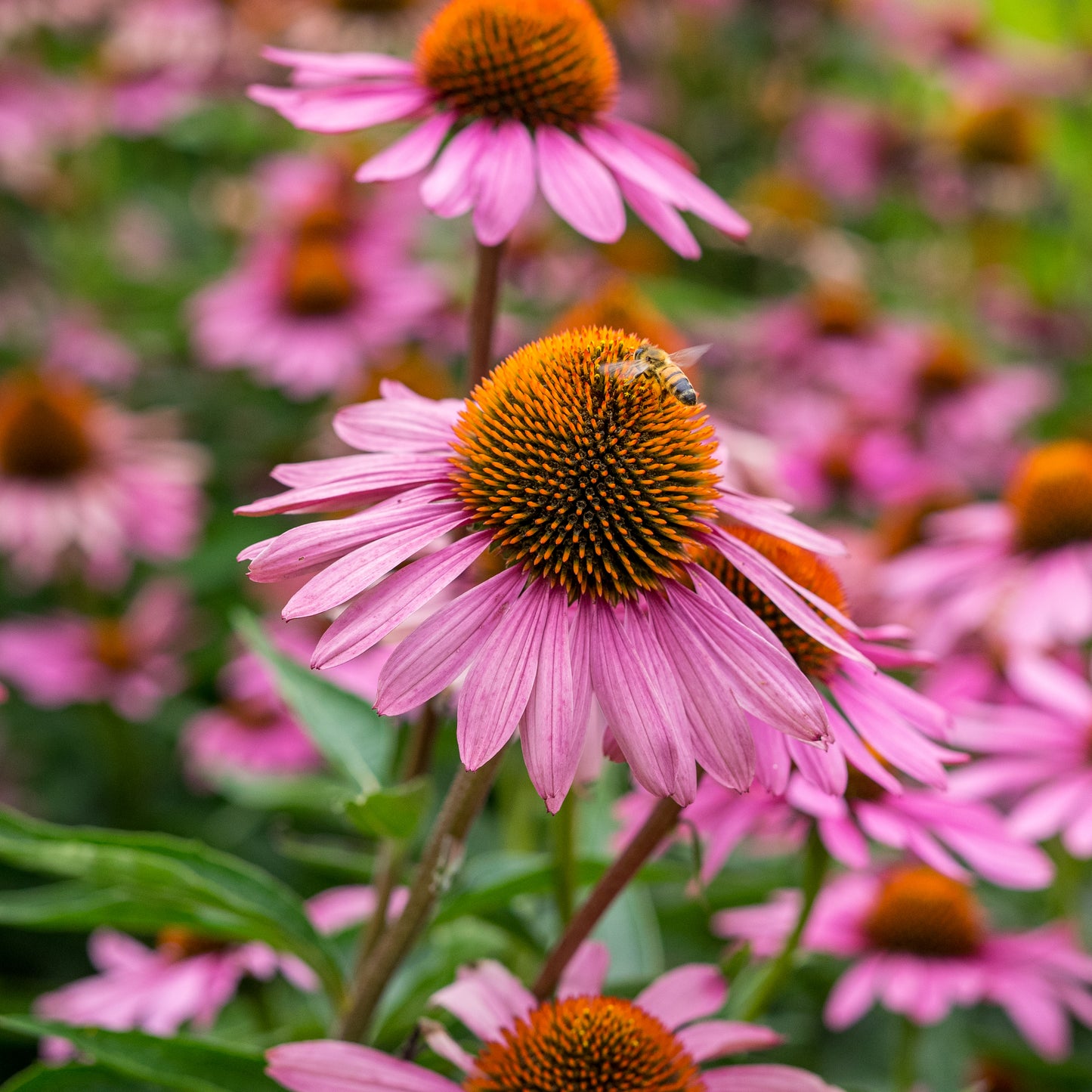
‘Magnus’ is a go-to Echinacea for its looks and reliability. In late summer, when other parts of the garden are beginning to slow down, it is just getting started — producing a succession of large, deep-pink single daisies from early July into September, each set off by a prominent copper-orange cone. Held horizontally on stiff, upright stems, they deliver a punchy injection of colour and an interesting contrast of form against vertical ornamental grasses and flower spikes.
An ideal candidate for a wildlife garden: nectar-rich blooms attract bees, butterflies and other pollinators through summer, followed by birds drawn to the seed heads through winter. It also makes an excellent cut flower, used fresh or dried. Thrives in full sun in free-draining soil.
Height × Spread: 100cm × 50cm
Share
Plant Notes
-
Care Guide
Plant in full sun in well-drained, reasonably fertile soil. Space generously — Echinacea dislikes overcrowding and resents competition from neighbours. Once established, it is drought-tolerant and largely trouble-free. Deadhead regularly throughout the growing season to encourage further flowers. Leave the final seed heads of the season standing through winter; they provide architectural interest and are a valuable food source for birds. Cut back to 5cm from ground level in late winter as new growth appears. Divide approximately every four years in autumn or spring, but leave undisturbed while the plant looks healthy and vigorous.
-
Good to Know
Wildlife-friendly — the flowers are a rich nectar source for bees and butterflies, and the seed heads attract goldfinches and other seed-eating birds through autumn and winter.
Long-lived and rewarding once established in the right conditions — good drainage and full sun are key.
Some varieties are lightly scented — worth seeking out on a warm day. -