Hardy's Cottage Garden Plants
Bistorta amplexicaulis 'Elworthy Candy'
Bistorta amplexicaulis 'Elworthy Candy'
Back soon
Couldn't load pickup availability
Plants are dispatched in growing condition and may not be in full flower. If too tall to pack safely, we may cut them back — this helps them establish more quickly. Read our Mail Order FAQs.


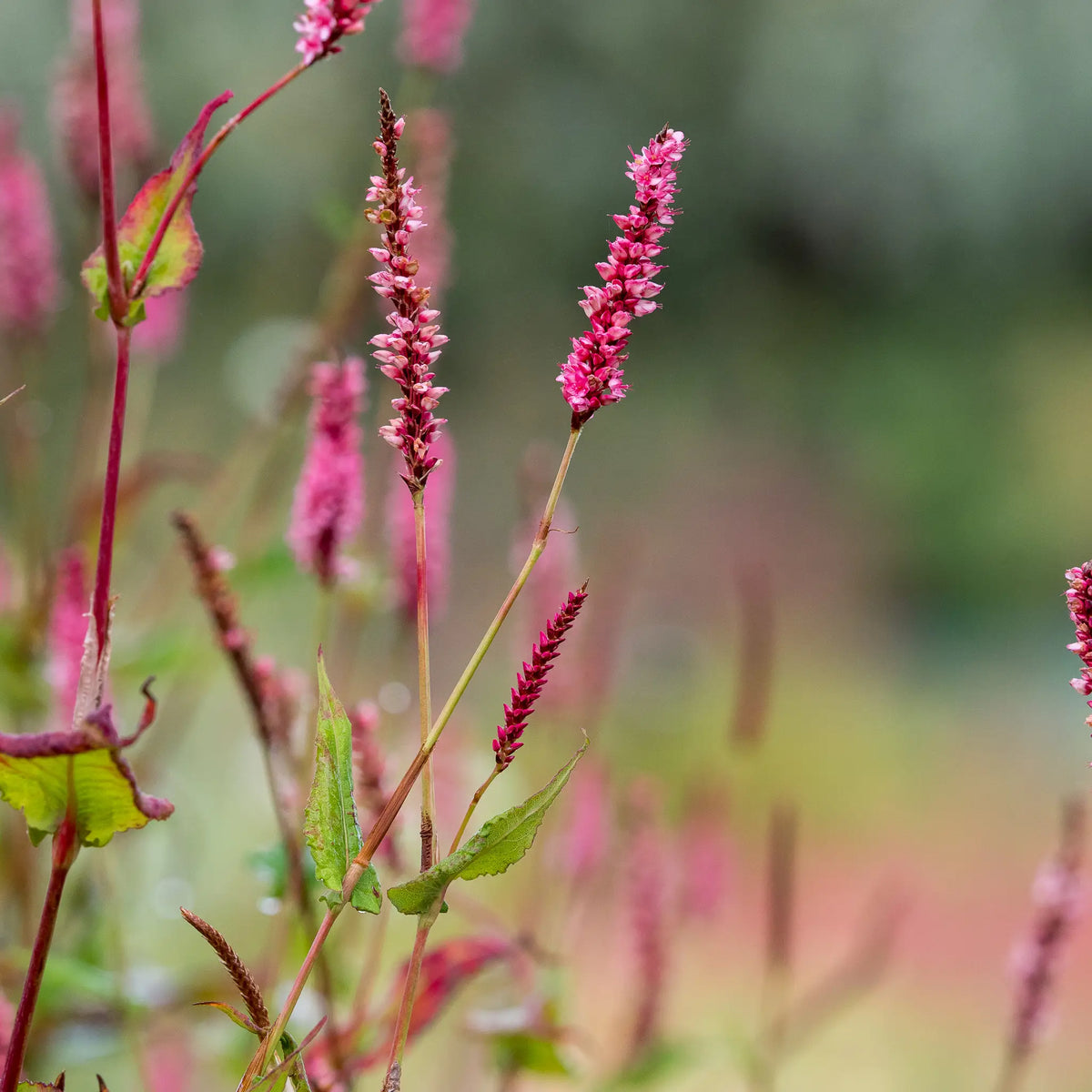
Masses of soft pink flower spikes sway gracefully above the foliage from late summer into autumn, drawing bees and other pollinators in numbers. Commonly known as Bistort, ‘Elworthy Candy’ has lance-shaped, deep green leaves that clasp the stems — a characteristic reflected in the species name amplexicaulis.
The species is native to the Himalayas; ‘Elworthy Candy’ is a selected cultivar valued for its soft candy-pink flower colour. It thrives in sun or partial shade with moisture-retentive soil, tolerating wet conditions well — ideal for planting along streams, around pond edges or in boggy situations, where it has room to spread. The stems also make excellent cut flowers.
Synonym: Persicaria amplexicaulis ‘Elworthy Candy’
Height × Spread: 120cm × 70cm