Hardy's Cottage Garden Plants
Echinacea 'Meditation White' PBR
Echinacea 'Meditation White' PBR
14 in stock
Couldn't load pickup availability
Plants are dispatched in growing condition and may not be in full flower. If too tall to pack safely, we may cut them back — this helps them establish more quickly. Read our Mail Order FAQs.

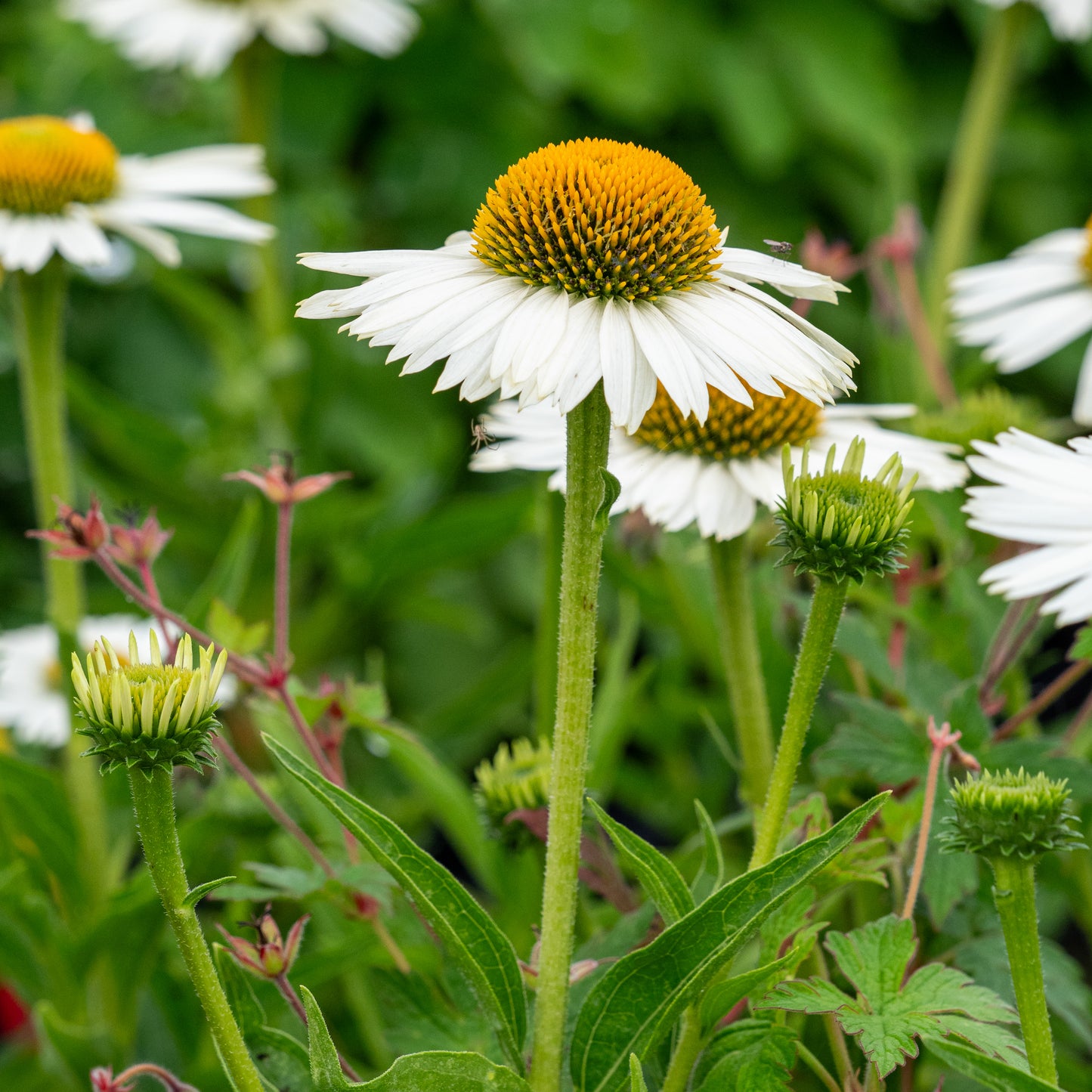
Introduced in 2014, Echinacea 'Meditation White' has a dense, compact form and is exceptionally free-flowering. Slightly reflexed white petals surround a jaunty golden-yellow cone that is a firm favourite with pollinators. The flowerheads also make a fantastic cut flower — and still look good after the petals have fallen.
Unlike most Echinacea, this one tolerates partial shade and slightly heavier soils, making it suitable for a wider range of conditions. Like all coneflowers it dislikes excessive winter wet, so plant in reasonably free-draining soil. Easy to grow and drought-tolerant once established.
Cut old stems to the base once flowering is over to encourage new growth. At the end of the season, leave remaining heads in place to provide winter nourishment for the birds. Perfect for containers, beds and borders, courtyard and patio displays, and wildlife gardens.
Height × Spread: 60cm × 50cm