Hardy's Cottage Garden Plants
Echinacea purpurea 'Fatal Attraction'PBR
Echinacea purpurea 'Fatal Attraction'PBR
Regular price
£10.00 GBP
Regular price
Sale price
£10.00 GBP
Taxes included.
Shipping calculated at checkout.
Available Summer 2027
Quantity
Couldn't load pickup availability
Plants are dispatched in growing condition and may not be in full flower. If too tall to pack safely, we may cut them back — this helps them establish more quickly. Read our Mail Order FAQs.

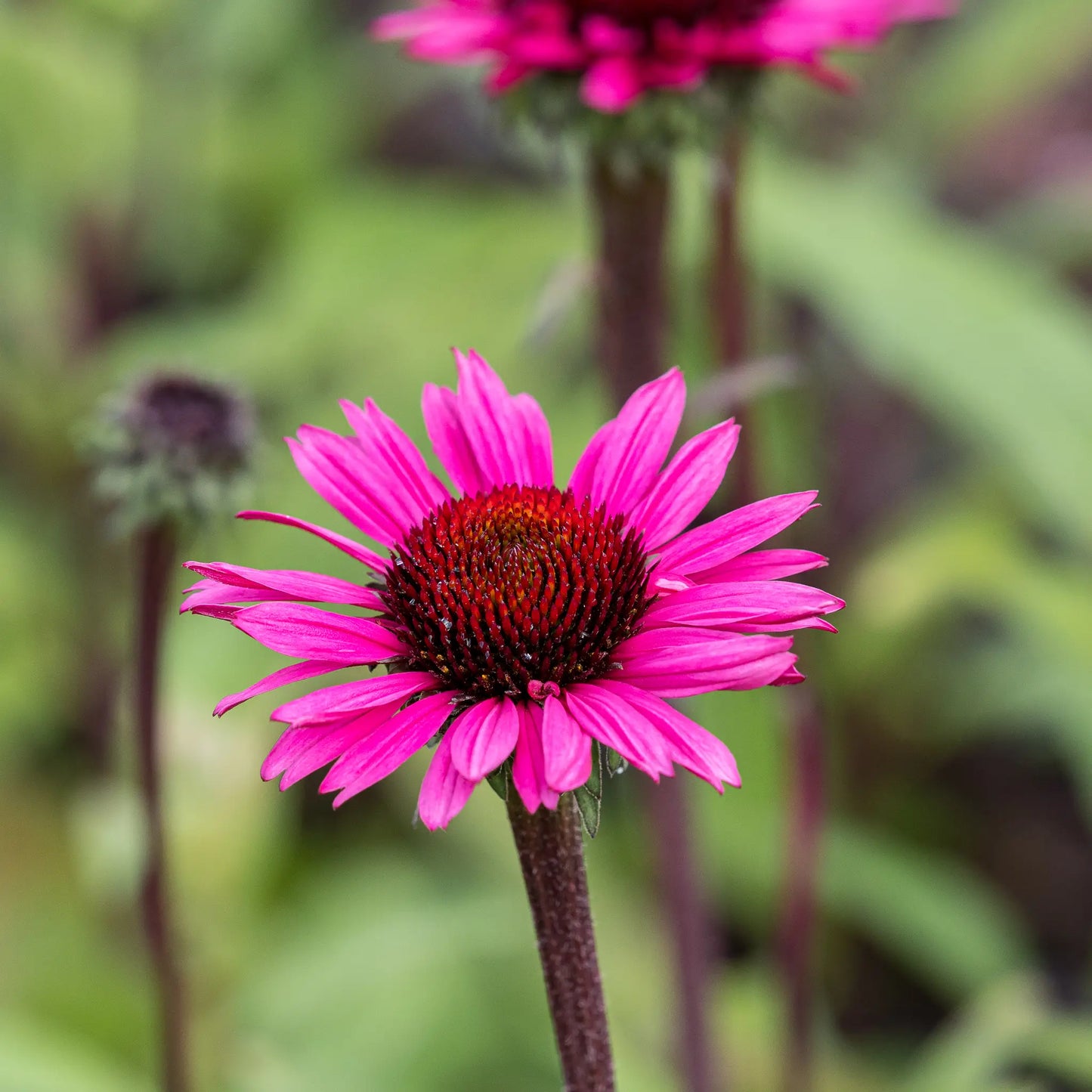
Echinacea ‘Fatal Attraction’ is characterised by its large, vivid pink daisy flowers carried on sturdy stems of a deep purple-black — a striking contrast that sets this apart as one of the finest pink coneflowers available. Strong and reliable, it readily attracts bees and butterflies, ideal for a wildlife garden.
Equally at home in a mixed border or container, it prefers full sun but tolerates light shade. Grow in good fertile, well-drained soil.
Height × Spread: 60cm × 50cm
☀️
Sunlight
Full sun,
Partial shade
📅
Season of Interest
Summer,
Autumn
🌸
Flower Colour
Pink
🌿
Foliage Colour
Dark green
Preferred Soil Type
Loamy,
Sandy,
Chalky
💧
Soil Moisture Content
Moderate,
Low